Masseter Botox in Sydney 2026: The Injection Nurse's Guide to Jaw Slimming, Bruxism Relief and Why Late Autumn is the Right Time to Start
By SkinSpirit — Cosmetic Nurse, SkinSpirit Sydney Published 23 April 2026
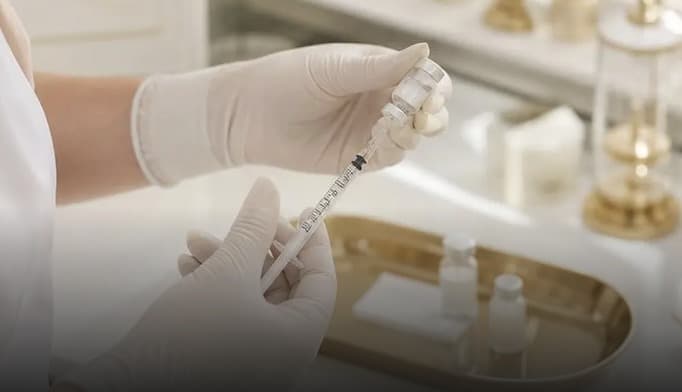
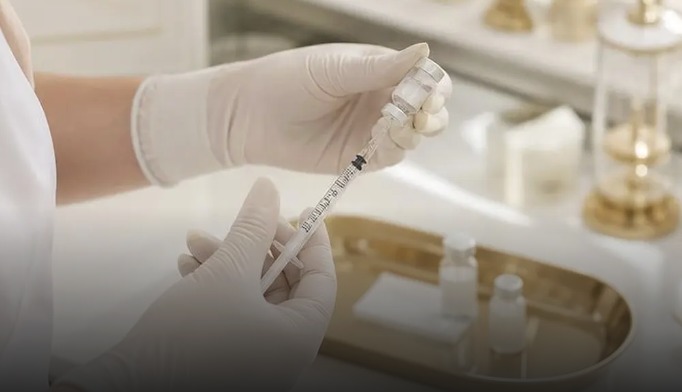
There is a treatment I get asked about more than any other in the consult room, and it is not lip filler, and it is not undereye tear trough, and it is not even profile-balancing chin filler. It is masseter botulinum toxin — the small, almost ceremonial set of injections at the back angle of the jaw that, over six to eight weeks, gently softens a square lower face into something more oval, more heart-shaped, more "rested." Half my clients arrive having watched a TikTok and want the V-line. The other half arrive at the recommendation of their dentist, exhausted from a year of waking up with a clenched jaw and a cracked molar, and have no aesthetic interest at all. Both are right. Masseter Botox is one of the rare treatments in modern aesthetic medicine that is genuinely two things at once — a contouring procedure and a functional muscle therapy — and the way you plan it, dose it and follow it up has to honour both.
This guide is the long version of the conversation I have on the consult chair, written for Sydney clients in late April 2026. It is the right time of year to be having it: the masseter muscle does not soften overnight, peak effect lands at six to eight weeks, and people who book in the last week of April see the contour land in time for end-of-financial-year events, mid-winter weddings and the run into spring. It is also the right time medically — bruxism flares with cold weather and stress, both of which are about to arrive, and starting toxin now means the muscle is quiet through the worst of it.
What the masseter actually is, and why it matters
The masseter is the most superficial of the four muscles of mastication. It originates along the zygomatic arch (your cheekbone) and inserts onto the angle and ramus of the mandible (your jaw). It is the muscle you can feel bulging when you clench your back teeth. Its job is to elevate the mandible — closing the jaw, generating bite force — and a healthy human masseter can produce around 70 kg of force at the molars, which is genuinely a lot of force to be running through a single small muscle dozens of times an hour while you sleep.
What the textbook does not always say is that the masseter is a layered muscle, and this is the single most clinically important fact about it. There is a superficial layer, a middle layer and a deep layer — three discrete bellies, each with its own innervation pattern and its own line of pull. Some authors describe up to five layers in dissection studies. The middle and deep layers are particularly relevant: their fibres run more vertically and contribute disproportionately to bulk in the lower jaw angle, while the superficial layer wraps anteriorly and contributes more to chewing force than to visible width. A masseter Botox plan that treats the muscle as a single uniform target — three or four points injected superficially — is a plan that will not deliver a clean, durable, paradox-free result. The injector who reads the layered anatomy and adjusts both depth and dose distribution accordingly is the one whose results you have been seeing on Instagram.
There are two reasons this matters for you, the client. The first is contour: a masseter that is genuinely large because of muscle hypertrophy (clenchers, gum-chewers, tough-chew-food eaters, people of East and Southeast Asian heritage who carry more masseter mass on average) will respond beautifully to toxin, but only if the deeper bellies are reached. A pure superficial injection thins the front of the muscle, leaves the back belly intact, and produces something my profession quietly calls paradoxical bulging — a strange, late-onset second peak of jaw width, usually showing up around the two-week mark, that frightens clients and is preventable with technique. The second is function: bruxism contractions are driven heavily by the deep masseter and the medial pterygoid (which sits behind it, inaccessible from the cheek). Treating the superficial layer alone may slim the face slightly while leaving the grinding cycle untouched.
The two reasons people actually book it
In my Sydney chair the split is roughly 60/40 aesthetic to functional, but with significant overlap — most people end up wanting both outcomes once they understand what is on offer.
The aesthetic ask: the V-line, the heart shape, the softer angle. Modern East Asian beauty standards have for at least two decades centred on a tapered lower face, and that standard has thoroughly crossed over into Western Sydney aesthetics through K-pop, J-pop, the Korean skincare wave and a generation of Chinese-Australian and Korean-Australian clients who grew up with mothers and aunts who treated masseter slimming as routine. The mechanism is straightforward: chronic toxin-mediated relaxation reduces the work the muscle does, the muscle atrophies in a use-dependent way (in exactly the same way an unused bicep would), and over three to six months the visible width of the lower face reduces in proportion to the muscle volume lost. Imaging studies using ultrasound and 3D photography consistently show 20–30% reduction in masseter thickness at three to six months post-treatment, with the visible facial slimming peaking somewhere between weeks 8 and 12. The change is real and measurable; it is not a contour illusion the way contour makeup is.
The functional ask: bruxism, jaw pain, headache. Sleep bruxism (grinding) and awake bruxism (clenching) are common, often unrecognised, and meaningfully degrade quality of life. The cardinal symptoms are morning jaw stiffness, temple headaches that start frontal and migrate posteriorly, popping or clicking at the temporomandibular joint, sensitive front teeth, fractured molars, worn cusps the dentist has shown you on a photo, and — crucially for our clientele — a slowly-widening lower face over years of chronic hypertrophy. Botulinum toxin does not cure bruxism (the central drivers, including stress, sleep architecture and serotonergic medication, remain) but it dramatically reduces the force of the contractions, and by doing so reduces every downstream symptom. Patients in published trials report meaningful reductions in pain scores, in headache frequency and in dentist-observed wear at six to twelve weeks. For Sydney clients this is most relevant going into winter: cold weather, end-of-year work pressure and a reliably worse sleep environment all push bruxism scores up, and starting toxin in late April means the muscle is quiet through the worst three months.
Dosing, depth, and what a real treatment plan looks like
The published dosing range for masseter botulinum toxin A (BoNT-A, the active molecule in Botox, Dysport and Xeomin) sits anywhere between 8 and 100 units per side. That range is so wide as to be almost useless without context, so let me give you the working numbers I actually use.
For a first-time aesthetic client with a moderately hypertrophic masseter, I would typically plan 20–30 units per side of onabotulinumtoxinA (Botox) or 60–90 Speywood units per side of abobotulinumtoxinA (Dysport), distributed across three to four injection points in the lower third of the muscle, reaching the middle and deep bellies. For a heavier muscle, particularly in a male client or a long-standing severe clencher, that goes to 30–50 units per side of Botox or proportionate Dysport. For a small, slim-faced client who has booked purely for mild bruxism, 15–20 units per side is often sufficient — the goal there is functional, not contour, and the lower dose preserves more chewing comfort while still quieting the grind. Temporalis and lateral pterygoid involvement, where the bruxism story is severe and TMD pain is dominant, may warrant additional toxin to those muscles in a separately planned visit, but I will not address those in detail here.
Three principles I bring to every plan, which I will share so that you can interrogate any quote you receive elsewhere:
Depth before dose. I would rather inject 25 units per side at the correct depth (middle to deep belly, perpendicular to the bone, needle hub close to skin) than 40 units distributed superficially. The deeper injection generates better atrophy with less risk of paradoxical bulging, less risk of catching the risorius and zygomaticus minor anteriorly (which can pull the smile), and less risk of unintended diffusion into the parotid gland. This is the single most important technical decision in masseter work, and it is the one most commonly compromised in volume-driven clinics where the brief is "in and out in fifteen minutes."
The safe zone is a triangle, not a square. The injection field is bounded by a line from the tragus to the corner of the mouth (above which you do not inject, to avoid risorius and the parotid duct), the anterior border of the masseter (palpated by asking the client to clench, then injecting at least one centimetre posterior, to avoid the buccinator and the smile muscles), and the posterior border at the angle of the mandible (palpated, with all injections at least half a centimetre anterior to the bony angle to avoid catching the platysma and the marginal mandibular nerve below). Inside that triangle, in the middle and lower thirds, is the working field. Outside it, you risk the smile asymmetry that is the most common visible complication of masseter Botox done badly.
Symmetry is a baseline measurement, not an afterthought. Most people have a dominant chewing side. Their masseter is therefore meaningfully asymmetric at baseline — often by 15–20% in volume between left and right. A symmetric dose into an asymmetric muscle produces, predictably, an asymmetric result. I measure (by palpation, by photographic comparison, and where useful by ultrasound) and I dose accordingly: more toxin to the larger muscle, less to the smaller. Clients who have been treated symmetrically for years and notice their face slowly drifting asymmetric over the course of a treatment cycle are almost always experiencing this effect.
The complication you actually need to know about: paradoxical bulging
Of all the things that can go sideways with masseter toxin, the one most worth understanding before you book is paradoxical masseteric bulging (PMB). Reported incidence in the literature ranges from around 0.5% in cautious-technique series up to as high as 18.8% in less careful ones, with most cases appearing roughly two weeks post-injection. The mechanism is now well-described: when toxin is delivered too superficially, or only into the anterior fibres, the deeper or posterior bellies remain functional. The brain, finding that closing force has been reduced, recruits the unaffected fibres harder. Those fibres, working harder than ever and unrestrained by the relaxed neighbours, hypertrophy locally — producing a visible, palpable, second-peak bulge usually at the lower posterior corner of the muscle. Clients describe it as "my jaw looks weirder than before, and only on one side, and only at certain angles."
PMB is correctable. The published technique is straightforward: ultrasound or careful palpation to identify the contracted segment, then a small targeted top-up dose — usually 5–15 additional units — injected directly into the bulging fibres at depth. Most cases resolve over four to six weeks after the corrective injection. But the better outcome is not to produce PMB in the first place, which is why your injector's depth technique matters more than the brand of toxin or the sticker price of the appointment.
The other complications worth naming: transient chewing fatigue (real, common in the first three to four weeks, particularly noticeable on tough foods like steak or raw carrot — usually resolves as the brain adapts and the deep bellies remain partially active); smile asymmetry (rare with correct injection within the safe triangle, more common with anterior creep into risorius); a temporary "sunken" look at the angle of the jaw three to five months in for clients who continue treatment indefinitely without a planned break (this is a real consideration for thin-faced clients and is one reason I deliberately reduce maintenance doses over time rather than holding them flat). None of these are dangerous. All are manageable. Most reflect technique decisions made at the consult, not after.
Timing, maintenance, and the Sydney calendar
Botulinum toxin A binds to the SNAP-25 protein at the neuromuscular junction, blocks acetylcholine release, and disables the affected motor end plates. New end plates regrow over months — in the masseter, typically faster than in the smaller upper-face muscles because the masseter is large, well-vascularised and metabolically active. Functional return therefore lands somewhere between three and four months for most clients, and the visible re-bulking lands a little later, around month five to six.
For a client whose primary goal is contour, the standard induction plan is two treatments three to four months apart, then a single maintenance treatment every six months indefinitely. The first two treatments do most of the atrophy work; the maintenance treatments hold the result. Total annual toxin spend is roughly half what it is for an upper-face Botox client because the interval is longer.
For a client whose primary goal is bruxism management, I tend to treat every three to four months for the first year, then trial a longer interval in the second year if the dental and headache picture has stabilised. The goal here is to keep the muscle quiet enough to break the grinding habit, not to maintain an indefinitely paralysed jaw, and most of the long-term clients I have are now on twice-yearly maintenance with their dentist confirming no new wear.
The Sydney calendar matters for two reasons. First, peak effect at six to eight weeks means a late-April treatment lands the contour change in early to mid-June, which is the right window for end-of-financial-year events, mid-winter weddings and (a thing my clients care about) season-of-photography travel. Second, bruxism is reliably worse in cooler months and through periods of increased work stress; treating in late April gives you a quiet jaw through winter when you most need it.
Who is not a good candidate
I would not be honest if I made it sound like masseter Botox is for everyone. The clients I gently steer away from this treatment are: those with a genuinely thin lower face who have already lost facial fat and would look gaunt with further volume reduction at the angle (these clients usually need the opposite — biostimulator at the jaw, sometimes filler at the angle); clients with a primarily skeletal cause of a wide jaw (a square mandible angle that is bony rather than muscular, palpable as bone not muscle on clench, which simply will not respond to muscle relaxation); clients with active or recent neuromuscular disease (myasthenia gravis, Lambert-Eaton, motor neurone disease, ALS — toxin is absolutely contraindicated); pregnancy and breastfeeding (no good safety data, deferred); and clients whose expectation is that masseter Botox will deliver a chiselled, snatched lower face within two weeks, which it will not. The change is real, slow, and quiet, and the people happiest with it are the ones who came in expecting a six-week timeline and a 30% slimming, not a single-session transformation.
There is also a small cohort I treat with extra caution: clients who already have significant lower-face fat pad descent, where reducing the masseter without addressing the laxity above can subtly accentuate the jowl. For these clients I either combine masseter toxin with HIFU or RF microneedling at the same visit (to support the soft tissue while the muscle retreats), or I sequence: masseter toxin first, soft-tissue tightening at the eight-week review, contour reassessment at month four. Combination protocols of this kind are a defining feature of how the better Sydney clinics now work — see our internal piece on combination aesthetic treatments in Sydney for how those decisions are sequenced.
The first-appointment script: what to ask, what to expect
If you are booking masseter toxin for the first time — at SkinSpirit or anywhere else in Sydney — the conversation I think you should have at the consult covers six things, and you should expect your injector to bring most of them up before you do.
One. Have they assessed both sides for asymmetry, on clench, photographically and by palpation, and noted the dominant chewing side? If they have not, the dose plan is not yet personalised.
Two. Are they injecting at depth into the middle and deep bellies, or only superficially? If the answer is "superficial only" or "I just do four points across the surface," you are at meaningful risk of paradoxical bulging.
Three. What is the planned dose, in units per side, and what is the rationale? "About 25 units" is a fine answer if it is followed by a reason. "I always do 50 units on everyone" is not.
Four. Are they staying inside the safe injection triangle (tragus-to-mouth-corner above, anterior border posteriorly, mandibular angle inferiorly)? This is a question your injector should be able to draw on the photograph for you.
Five. What is the review plan? You should be booked in at the two-week mark for an asymmetry check (and to catch early PMB if it appears), and at the six-to-eight-week mark for outcome assessment and a top-up if needed. A clinic that injects and waves you out without a follow-up is not running a real treatment plan.
Six. What is the off-ramp? If, in twelve months, you decide masseter toxin is not for you, the muscle returns over four to six months once treatment stops. The long-term atrophy reverses; you are not committing to a permanent change.
In Australia, all botulinum toxin treatments are Schedule 4 prescription medicines and must be prescribed by an authorised medical practitioner before administration — a system the Therapeutic Goods Administration takes seriously and which has tightened materially since 2024. Your injector should be a registered nurse working under documented prescriber oversight, the prescription should be specific to you after a real consultation (not a back-room script for the clinic's caseload), and the product should be a TGA-approved brand (Botox, Dysport, Xeomin or, as of late 2025, the newer letibotulinumtoxinA preparations now carrying TGA approval). Discount cosmetic toxin from non-medical settings is, in 2026, both illegal and unsafe — and the masseter, with its proximity to the parotid gland, the marginal mandibular nerve and the muscles of facial expression, is genuinely not a muscle to learn on.
How masseter toxin sits inside a wider treatment plan
The clients I see whose lower faces are most consistently beautiful at five years are not the ones who got masseter Botox in isolation — they are the ones whose injector treated the lower face as an integrated unit. That usually means: masseter toxin for the muscle width, careful chin and pre-jowl filler or biostimulator for the bony framework if needed, polynucleotide skin boosters or Profhilo for the skin quality across the lower cheek, and judicious HIFU or RF microneedling once a year for soft-tissue tightening. Each of these is a separate decision with its own indication, and not everyone needs every component, but the underlying logic is that muscle, fat, skin and bone all change with age, and isolating any one of them in isolation creates the slightly off, slightly imbalanced look that everyone has now learned to recognise.
Masseter Botox is, in my view, one of the cleanest entry points into thoughtful injectable work. The endpoint is functional as well as aesthetic, the timeline is honest, the published evidence base is strong, the maintenance interval is generous, and the off-ramp is real. If you have ever caught your jaw clenched at your desk at 3pm, or found yourself touching the angle of your jaw in the mirror and wondering why it looks heavier than it did at twenty-five, this is the conversation worth having before winter.
our cosmetic nurse is the senior injection nurse at SkinSpirit Sydney and works under documented Australian medical prescriber oversight. All treatments described here are individualised and require a formal in-person consultation, prescription and informed consent. This article is general educational information, not medical advice. To discuss whether masseter botulinum toxin is appropriate for your jaw anatomy, bruxism profile and aesthetic goals, book a consultation at SkinSpirit Sydney.
References and further reading
- Tsai, F-C. et al. Prevention and correction of paradoxical masseteric bulging following botulinum toxin A treatment. PMC8714579.
- Rethinking Paradoxical Bulging of the Masseter Muscle Following BoNT-A Injection. PMC11852252.
- A Clinical Decision-Making Algorithm for Botulinum Toxin Use in TMD. J Clin Med 2026; 15(2):755.
- Evaluation of the Efficacy of Low-Dose Botulinum Toxin Injection Into the Masseter for Bruxism. PMC9719743.
- Therapeutic Goods Administration: cosmetic injectables prescribing reforms, 2024–2025.
- ClinicalTrials.gov NCT02202070 — Botox for TMJ Disorder With Bruxism.