
Niacinamide (Vitamin B3) Complete Guide Sydney 2026: Benefits, Treatments & Why Clinics Love It
If you've spent any time on skincare TikTok, wandered through a Priceline beauty aisle, or had a skin consultation at a Sydney clinic, you've heard about niacinamide. It's everywhere right now — and for very good reason.
Niacinamide, also known as Vitamin B3, has quietly become the most recommended ingredient in both at-home skincare and professional treatment rooms across Australia. Unlike some trendy actives that come and go, niacinamide has an exceptional body of clinical research behind it, is suitable for virtually every skin type, and does something remarkable: it makes everything else work better.
This is the definitive guide for Sydney skin lovers who want to understand what niacinamide actually does, how to use it correctly, and how professional treatments featuring Vitamin B3 can deliver results that no serum alone can achieve.
What Is Niacinamide?
Niacinamide is the bioavailable, water-soluble form of Vitamin B3 (niacin). It's an essential nutrient your body needs for cellular energy production and DNA repair — and when applied topically to skin, it functions as a genuine multi-tasking powerhouse.
What makes it remarkable is its safety profile. Unlike retinol (which can cause irritation and sun sensitivity), AHAs (which require sun protection and can sting), or vitamin C (which is notoriously unstable and can cause flushing in some people), niacinamide is:
- Non-photosensitising — safe to use morning and night
- Non-irritating — tolerated even by rosacea-prone and reactive skin
- Compatible with virtually every other active — it won't fight with your retinol, your acids, or your vitamin C
- Effective across all skin types — oily, dry, combination, sensitive, mature, and everything in between
It's the rare ingredient where dermatologists, beauty therapists, and influencers are all in total agreement: this one is genuinely worth your attention.
The 9 Clinically-Proven Benefits of Niacinamide
1. Minimises the Appearance of Enlarged Pores
One of the most searched skin concerns in Australia, and niacinamide directly addresses it. By regulating sebum production and strengthening the skin structure around pore openings, consistent niacinamide use makes pores appear visibly smaller over 4–8 weeks of use. It doesn't literally close pores (nothing does — pores are permanent structures), but it reduces their visibility significantly.
2. Fades Pigmentation and Dark Spots
Niacinamide inhibits the transfer of melanosomes (melanin-containing packages) from melanocytes to surrounding skin cells. In plain English: it blocks the process that makes dark spots appear on the skin's surface. Multiple clinical trials have shown 2–5% niacinamide to be effective for post-inflammatory hyperpigmentation (PIH from acne), sun damage, and melasma — making it ideal for Sydneysiders coming out of summer with uneven tone.
3. Strengthens the Skin Barrier
Your skin barrier (the stratum corneum) is your body's primary defence against dehydration, pollution, bacteria, and environmental stressors. Niacinamide boosts the production of ceramides, fatty acids, and other lipids that form this barrier. In Sydney's dry autumn and winter, when central heating and cooler winds strip skin of moisture, this barrier-fortifying action is invaluable.
4. Reduces Redness and Inflammation
By modulating inflammatory pathways in the skin, niacinamide calms the visible redness associated with rosacea, reactive skin, acne, and general irritation. It's one of the few anti-inflammatory actives that can be used daily, in both day and night routines, without sensitisation.
5. Controls Sebum and Oil Production
For oily and combination skin types, niacinamide regulates sebaceous gland activity — reducing the amount of oil the skin produces without stripping it. This is the opposite of what harsh cleansers and astringents do; rather than triggering rebound oiliness, niacinamide creates sustainable long-term balance.
6. Smooths Skin Texture and Fine Lines
A landmark clinical study published in the International Journal of Cosmetic Science found topical niacinamide significantly reduced fine lines, wrinkles, hyperpigmentation, and skin sallowness compared to vehicle control after 12 weeks of use. The mechanism involves stimulating collagen synthesis and improving keratinocyte turnover — essentially helping the skin build more structural proteins and shed old cells more efficiently.
7. Brightens Dull Skin
Niacinamide improves overall luminosity by accelerating cellular turnover, reducing oxidative stress, and inhibiting the dull, yellowish discolouration (sallowness) that accumulates in sun-damaged or mature skin. Regular users frequently report that their skin "looks more awake" even before addressing any specific concern.
8. Antioxidant Protection
As a precursor to NAD+ (nicotinamide adenine dinucleotide), niacinamide supports cellular energy metabolism and DNA repair — including protecting against UV-induced DNA damage. While it's absolutely not a substitute for sunscreen, the antioxidant activity adds an additional layer of photoprotective support.
9. Helps Acne-Prone Skin Without Drying It Out
Unlike benzoyl peroxide or salicylic acid, niacinamide tackles acne through its anti-inflammatory and sebum-regulating actions without stripping or drying the skin. This makes it ideal as a supporting ingredient alongside dedicated acne treatments, and an excellent daily active for those who get hormonal breakouts.
Who Benefits Most from Niacinamide?
The honest answer is: almost everyone. But certain skin profiles see the most dramatic results:
Post-summer skin (May–August priority): If you've come out of a Sydney summer with uneven tone, sun spots, or congestion, niacinamide is your first-line ingredient for the cooler months ahead.
Rosacea and sensitive skin: One of the very few actives dermatologists and beauty therapists recommend for rosacea. It calms, doesn't provoke.
Oily and acne-prone skin: Sebum regulation + anti-inflammatory = a game-changing combination for breakout-prone skin.
Mature skin: The collagen-supporting, brightening, and anti-wrinkle effects make it an excellent complement to retinol in anti-ageing routines.
Dry and dehydrated skin: The barrier-repairing ceramide-stimulating action makes it especially relevant as we move into Sydney's autumn and winter.
How to Use Niacinamide at Home
What Concentration Should You Use?
- 2–5% — Ideal starting point. Well-tolerated by all skin types, effective for most concerns.
- 10% — Standard "active" concentration in many dedicated niacinamide serums. Effective for oily skin and visible pores.
- 20%+ — Found in some targeted spot treatments. Not necessary for daily all-over use.
Most retail products sit in the 5–10% range, which is well within clinical efficacy territory.
When to Apply It
Niacinamide is one of the most layering-friendly actives in skincare. Apply it:
- After cleansing, before moisturiser (serum step)
- In the morning and/or evening — no sun sensitivity concerns
- Alongside retinol, AHAs/BHAs, vitamin C, and hyaluronic acid
The old myth about niacinamide and vitamin C not being compatible has been largely debunked by modern cosmetic chemistry. At standard product concentrations and typical skin temperatures, the much-feared niacin flushing reaction is essentially theoretical, not a practical concern.
The Right Order
Cleanse → Tone (optional) → Niacinamide serum → Treatment serums → Moisturiser → SPF (AM)
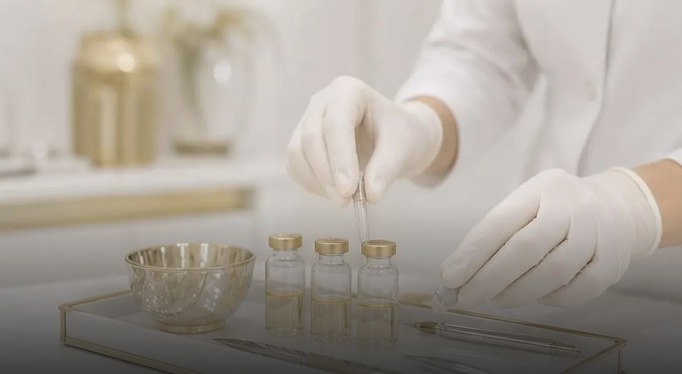
Niacinamide in the Professional Treatment Room
This is where things get genuinely exciting — because at-home niacinamide serums are effective, but professional treatments can deliver Vitamin B3 at concentrations and penetration depths that your bathroom routine simply can't match.
HydraFacial with Niacinamide Boosters
HydraFacial is one of the most popular treatments at SkinSpirit, and for good reason: the patented Vortex-Fusion technology allows us to infuse active ingredients directly into the skin's deeper layers during the treatment itself.
We can include niacinamide-rich booster serums in your HydraFacial, which means:
- Instant visible pore minimisation — the vacuum extraction removes congestion, and the niacinamide penetrates deeply to regulate sebum production
- Immediate brightening — patients routinely notice their skin looks lit-from-within after a niacinamide-boosted HydraFacial
- Zero downtime — suitable before events, no redness, no peeling
For clients focused on summer pigmentation recovery or pre-winter barrier optimisation, a niacinamide-boosted HydraFacial series (typically 3–6 treatments monthly) delivers measurably superior results to at-home use alone.
Skin Booster Injections — our cosmetic nurse's Injectable Vitamin B3 Protocols
Our cosmetic nurse shares her perspective:
"At the clinic level, we can now include niacinamide in customised skin booster cocktails — injected directly into the dermis via mesotherapy or micro-injection techniques. The difference in delivery is significant: topical niacinamide penetrates the epidermis, but injectable application reaches the dermis directly, where collagen synthesis and deeper structural changes happen.
For clients dealing with post-summer pigmentation, large pores, and dull skin, combining injectable Vitamin B3 with hyaluronic acid-based skin boosters (like Skinboosters or Profhilo) creates a synergistic effect. You're addressing hydration and structure simultaneously. I've seen remarkable results in clients who come in with sun-damaged, fatigued Sydney summer skin — the texture improvement after 2–3 sessions can be quite dramatic."
For injectable niacinamide treatments at SkinSpirit, our cosmetic nurse will assess your skin in a comprehensive consultation and design a bespoke protocol tailored to your specific concerns.
Chemical Peels Enhanced with B Vitamins
At SkinSpirit, some of our chemical peel protocols incorporate Vitamin B3 in the post-peel recovery phase. This is deliberate: the skin is most receptive to actives immediately after peeling, and niacinamide's barrier-repairing, anti-inflammatory properties support faster healing, reduced post-peel redness, and optimised results.
For post-summer pigmentation treatment (the May–August Sydney priority window), a series of targeted chemical peels with niacinamide recovery can dramatically accelerate the fading of sun spots, uneven tone, and congestion left over from a long Australian summer.
Niacinamide vs. Other Popular Ingredients: How Does It Stack Up?
| Concern | Niacinamide | Vitamin C | Retinol | AHAs | |---|---|---|---|---| | Pigmentation | ✅ Effective | ✅ Excellent | ✅ Effective | ✅ Effective | | Pores | ✅ Best in class | ❌ Not primary | ⚠️ Indirect | ⚠️ Indirect | | Barrier repair | ✅ Excellent | ❌ No | ❌ Can disrupt | ❌ Can disrupt | | Anti-ageing | ✅ Good | ✅ Good | ✅ Gold standard | ✅ Resurfacing | | Sensitivity | ✅ Excellent | ⚠️ Can sting | ❌ Can irritate | ❌ Can irritate | | Morning use | ✅ Yes | ✅ Yes | ❌ No (usually) | ❌ Not recommended | | Suitable for rosacea | ✅ Yes | ⚠️ Sometimes | ❌ Often not | ❌ Often not |
The takeaway: Niacinamide isn't necessarily better than vitamin C or retinol — it's better alongside them. It's the great collaborator of the skincare world, making everything else more effective while contributing directly to pore, pigmentation, barrier, and inflammation outcomes.
Niacinamide for Sydney's Seasonal Skin Challenges
Sydney has a beautifully mild climate compared to southern states, but the transition from summer to autumn–winter still poses real challenges for skin:
The Post-Summer Repair Window (May–June)
After months of UV exposure, beach days, and Sydney heat, most people arrive in May with some combination of:
- Sun damage and uneven pigmentation
- Enlarged, congested pores from summer sweating
- Barrier disruption from salt water, chlorine, and sunscreen overload
- Dullness from accumulated surface dead skin cells
This is exactly when niacinamide's anti-pigmentation, pore-minimising, and brightening effects are most valuable. Starting a dedicated niacinamide routine in May — ideally alongside a HydraFacial or chemical peel series — means you'll see measurable improvement by late June.
Winter Barrier Strengthening (June–August)
As Sydney cools and people start using indoor heating, the skin's moisture barrier comes under pressure. Niacinamide's ceramide-stimulating action becomes the priority here — keeping the barrier intact means less sensitivity, less reactivity, and better performance from every other product in your routine.
For clients who notice their skin becomes "finicky" in winter — reacting to products it tolerated fine in summer, feeling tight and uncomfortable after cleansing, looking grey and dull — the likely culprit is a compromised barrier. Niacinamide is first-line treatment.
Common Questions About Niacinamide
Can I use niacinamide every day?
Yes, absolutely. It's designed for daily use — morning and/or evening.
How long before I see results?
For pore minimisation and oil control: 2–4 weeks. For pigmentation: 4–8 weeks. For overall brightness: often noticed within 2 weeks of consistent use.
Does niacinamide cause purging?
No. Purging (initial breakout) is associated with ingredients that accelerate cell turnover, like retinol and AHAs. Niacinamide doesn't work through this mechanism, so no purging.
I have rosacea — is niacinamide safe?
Yes, and it's actually one of the recommended actives for rosacea management. Its anti-inflammatory and barrier-strengthening properties directly address rosacea's underlying mechanisms.
Can I use niacinamide with my retinol?
Yes — and you should. Niacinamide helps buffer the irritation that retinol can cause and supports the skin's ability to tolerate retinol at higher concentrations over time. Apply your retinol first (at night, on dry skin), then niacinamide over the top as a calming buffer.
What about niacinamide and vitamin C causing flushing?
This concern stems from early cosmetic chemistry theory about nicotinic acid (the flushing form of B3) forming from a niacinamide/ascorbic acid (vitamin C) reaction. At modern product pH levels and room temperature, this reaction is negligible. You can use both — though it's still often recommended to apply them at different times of day as a precaution.
Building a Niacinamide-Centred Routine
Here's a simple, clinic-recommended routine structure that puts niacinamide at the centre:
Morning
- Gentle cleanser (non-stripping, pH-balanced)
- Niacinamide 5–10% serum — apply to slightly damp skin for better absorption
- Hydrating moisturiser — hyaluronic acid + ceramides for maximum barrier support
- Broad-spectrum SPF 50 — non-negotiable in Sydney
Evening
- Oil cleanser (if wearing sunscreen or makeup) + gentle cleanser
- Niacinamide serum (or combined niacinamide + other actives serum)
- Treatment serum — retinol OR AHA/BHA (not both on the same night)
- Niacinamide again (optional — as a buffer over retinol if your skin is sensitive to it)
- Rich moisturiser — heavier for winter, lighter for summer
When to See a Professional About Niacinamide-Based Treatment
At-home niacinamide is genuinely effective — we encourage it. But if you're dealing with any of the following, a professional assessment will dramatically accelerate your results:
- Stubborn pigmentation that hasn't responded to 3+ months of topical treatment
- Significant post-summer sun damage with multiple dark spots or uneven tone
- Chronic enlarged pores that don't improve with consistent home care
- Persistent skin dullness that makes you look tired regardless of sleep
- Sensitive or rosacea-prone skin where you want guidance on building a safe active routine
Our skin consultations at SkinSpirit are a genuine clinical assessment — not a product sales session. We'll look at your skin, discuss your history and concerns, and map out a treatment pathway that combines in-clinic work (HydraFacial, skin boosters, peels) with an evidence-based home routine.
The Bottom Line on Niacinamide in 2026
Niacinamide has earned its place as the cornerstone active of Australian skincare in 2026 not through hype, but through an unusually consistent body of scientific evidence, exceptional tolerability, and genuine versatility.
Whether you're:
- Coming out of summer with uneven tone and congested pores
- Building a winter-ready barrier
- Trying to calm a reactive or rosacea-prone complexion
- Looking to complement your retinol or AHA routine
- Seeking professional-grade results through clinic treatment
— Vitamin B3 belongs in your routine.
At SkinSpirit, we incorporate niacinamide into HydraFacial boosters, injectable skin booster protocols, and peel recovery sequences because it delivers real, measurable improvements to real Sydney skin concerns.
Ready to see what niacinamide can do for your skin?
Book a skin consultation with our clinical team →
Written by our senior beauty therapist, Beauty Therapist at SkinSpirit. Our senior beauty therapist specialises in skin conditions, barrier health, and evidence-based facial treatments including HydraFacial, LED therapy, and customised skincare regimens for Sydney's diverse climate challenges.