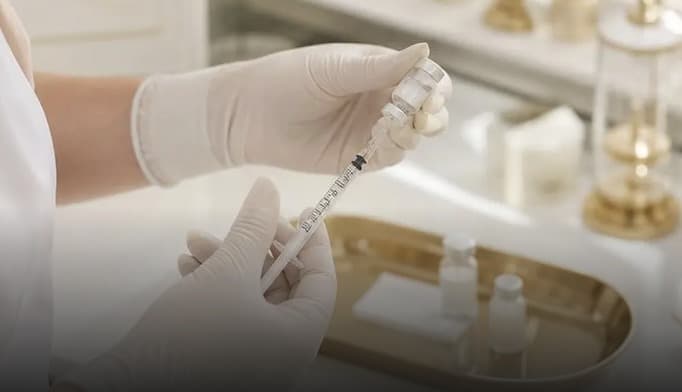
Lip Filler in Sydney 2026: The Complete Guide to Natural Lip Augmentation
By SkinSpirit — Cosmetic Nurse, SkinSpirit Sydney Published 28 April 2026
There is a reason lip filler remains the single most requested cosmetic injectable procedure in Sydney — and in most of the Western world. Lips sit at the geometric centre of the face. They are the first thing people see when you speak, smile, laugh, or simply exist in a conversation. Unlike many aesthetic concerns that develop slowly with age, lip volume and definition are things people care about from their early twenties, and they continue to matter across every decade that follows.
Yet for a treatment so popular, lip filler is also the one most burdened by misinformation, fear, and examples of poor technique shared endlessly on social media. The "duck lips" and "filler moustache" images that circulate online represent the absolute worst of what happens when the wrong product is placed in the wrong plane by someone without adequate anatomical knowledge. They do not represent what modern lip augmentation looks like when it is done well.
I inject lips every single day. It is, without exaggeration, the procedure I perform most frequently at SkinSpirit. And the overwhelming majority of my clients leave looking like they were simply born with beautiful lips — their friends notice something is different but cannot identify what. That is the goal. That has always been the goal.
This guide is a comprehensive, honest exploration of lip filler in Sydney in 2026. It covers anatomy, product selection, technique, what to expect during and after treatment, how to avoid complications, and how to find the right injector. Whether you are considering your very first millilitre or you have been getting lips done for years, there is something here for you.
The anatomy of beautiful lips
Before we discuss any filler, you need to understand what makes lips look the way they do. This matters because the anatomy dictates every decision I make during a treatment — how much product to use, where to place it, which technique to employ, and when to stop.
Vermilion and vermilion border
The red part of the lip that you see is the vermilion. It is a transitional zone between the keratinised skin of the face and the mucous membrane inside the mouth. The vermilion has a rich blood supply — which is why lips appear red or pink — and virtually no subcutaneous fat of its own. This means that the shape and volume of the lip is determined almost entirely by the underlying orbicularis oris muscle and whatever soft tissue lies between the muscle and the vermilion surface.
The vermilion border is the sharp line — sometimes called the "white roll" — that separates the red lip from the surrounding skin. In a well-defined lip, this border is crisp and slightly elevated, catching light and creating the appearance of definition. One of the first things that happens with ageing is that this border softens and blurs, which is why older lips often look "flat" even if they have not lost significant volume.
The Cupid's bow
The double curve at the centre of the upper lip is the Cupid's bow. Its shape is genetically determined and highly variable between individuals and ethnic groups. Some people have a pronounced, sharply peaked Cupid's bow; others have a gentle, shallow curve that is barely perceptible. Neither is better or worse — they are simply different. A good injector works with your natural Cupid's bow shape rather than imposing a template that does not suit your face.
Upper lip to lower lip ratio
In classical facial aesthetics, the lower lip should be slightly fuller than the upper lip. The most commonly cited "ideal" ratio is roughly 1:1.6 — for every one unit of upper lip volume, there should be approximately 1.6 units of lower lip volume. In reality, there is considerable natural variation, and many beautiful faces deviate significantly from this ratio. What matters is harmony. If the upper lip is dramatically larger than the lower lip, the face reads as unnatural to the human eye regardless of absolute size.
This ratio is one of the most commonly violated principles in poor lip filler work. Overfilling the upper lip — particularly the central tubercle — creates that "shelf" or "duck lip" appearance that is instantly recognisable as artificial. At SkinSpirit, we assess your natural ratio and work to enhance it proportionally rather than distort it.
The philtrum and philtral columns
The philtrum is the vertical groove between the base of the nose and the Cupid's bow. The two raised ridges flanking this groove are the philtral columns. Together, they frame the upper lip and create the vertical dimension that gives the lip area its three-dimensional quality. Loss of philtral column definition — either through ageing or overfilling of the upper lip — is one of the most ageing changes in the lower face and one of the most difficult to correct once it has happened.
Oral commissures
The corners of the mouth where the upper and lower lip meet are the oral commissures. With ageing, these tend to turn downward as the supporting fat and collagen in the perioral region deteriorate. Downturned commissures create a permanently unhappy or stern expression, which is why commissure support is often a critical component of comprehensive lip rejuvenation rather than just filling the body of the lips.
Why lips lose volume and definition with age
Understanding the ageing process helps explain why lip filler is not just a cosmetic luxury — it is a restoration of what time takes away.
Collagen and elastin degradation
From the mid-twenties onward, the body produces approximately one percent less collagen per year. The elastin fibres that give skin its snap-back quality also fragment and lose function. In the lip, this manifests as thinning of the vermilion, softening of the vermilion border, and loss of the firm, plump texture that characterises youthful lips.
Bone resorption
The maxilla — the upper jawbone that supports the upper lip — undergoes significant resorption with age. The piriform aperture (the bony nasal opening) widens, and the alveolar ridge recedes. This means the structural scaffolding that the upper lip sits upon literally shrinks, causing the lip to fall inward and appear thinner even if the soft tissue volume has not changed dramatically.
Muscle changes
The orbicularis oris muscle — the sphincter muscle that encircles the mouth — becomes hyperactive with age as it compensates for the loss of underlying support. This increased muscle tension contributes to the vertical lip lines (sometimes called "smoker's lines" or "barcode lines") that radiate from the vermilion border outward. These lines are not caused by smoking alone; they are a natural consequence of ageing accelerated by repetitive muscle movement.
Sun damage and environmental exposure
Cumulative UV exposure degrades the already thin collagen layer within the lip, accelerates pigmentation changes at the vermilion border, and contributes to a dry, crepey texture. Sydney's UV index is among the highest in the world for a major city, which means our clients often present with more photodamaged perioral skin than their counterparts in less sun-intense locations.
Types of lip filler available in Sydney in 2026
Not all hyaluronic acid fillers are created equal, and the product selection is one of the most important decisions in any lip treatment.
Hyaluronic acid (HA) fillers
Hyaluronic acid fillers remain the gold standard for lip augmentation in Australia. HA is a naturally occurring polysaccharide found in skin and connective tissue, which means the body recognises it and metabolises it over time. Crucially, HA fillers are reversible — if there is a problem, the enzyme hyaluronidase can dissolve the product. This safety net is why I exclusively use HA fillers for lip augmentation.
The key differentiator between HA fillers is their rheological properties — how the gel behaves when it is placed in tissue.
Soft, low-G' fillers (like Juvederm Volbella or Restylane Kysse) have low elasticity and high viscosity. They spread smoothly, integrate beautifully into the lip tissue, and produce a soft, natural result. These are ideal for patients who want subtle enhancement, lip border definition, or correction of superficial lip lines. They typically last eight to twelve months.
Medium-G' fillers (like Juvederm Volift or Restylane Defyne) offer a balance of projection and softness. They are excellent for clients who want noticeable volume increase while maintaining a natural feel. These are the workhorses of lip augmentation — suitable for most first-time and experienced clients alike. Duration is typically twelve to fifteen months.
Firmer fillers (like Juvederm Voluma) are designed primarily for deep volumisation in areas like the cheek and chin. While some injectors use them off-label in the lips for dramatic projection, I generally avoid this approach because firmer products in the lip can feel unnatural, look overly defined, and carry a higher risk of vascular complications due to the higher injection pressures required.
Choosing the right product
Product selection depends on the specific treatment goals:
- First-time clients seeking subtle enhancement: Soft HA filler, 0.5–1.0 mL
- Volume restoration for age-related thinning: Medium HA filler, 1.0 mL
- Significant augmentation (staged): Medium HA filler, 1.0 mL per session over two to three sessions
- Border definition and fine lines: Soft HA filler or skin booster, 0.5–1.0 mL
At SkinSpirit, I assess each client's anatomy, skin quality, existing volume, and goals before recommending a specific product and volume. There is no one-size-fits-all approach.
The injection appointment: what actually happens
Understanding the process reduces anxiety and helps you prepare properly.
Before your appointment
- Avoid blood thinners for seven days: aspirin, ibuprofen, fish oil, vitamin E, and alcohol. These increase bruising risk significantly.
- Avoid dental work for two weeks before and after. Dental procedures introduce oral bacteria that could theoretically increase infection risk around fresh injection sites.
- Inform your injector about any history of cold sores. If you are prone to herpes simplex virus (HSV-1) outbreaks, lip filler can trigger a flare. We prescribe prophylactic antiviral medication (valacyclovir) to take before and after treatment.
- Come with clean skin — no lip products, makeup, or self-tanner on the lip area.
Numbing
Lip injections are not painless, but they are far more comfortable than most people expect. At SkinSpirit, we apply a potent topical anaesthetic cream (typically containing lidocaine and prilocaine) to the lips twenty minutes before treatment. The cream is covered with cling wrap to enhance penetration. By the time we start injecting, the vermilion is significantly numb.
Additionally, all modern HA lip fillers contain lidocaine within the gel itself. This means each injection delivers a small dose of anaesthetic directly into the tissue, so the procedure becomes progressively more comfortable as it goes on. Most clients rate the discomfort at two to four out of ten — similar to a dental clean.
For highly anxious clients, we can also perform a dental nerve block (infraorbital and mental nerve blocks), which provides near-complete anaesthesia of the entire lip area. This is the same type of injection your dentist gives before a filling. It adds about ten minutes to the appointment but eliminates virtually all sensation.
The injection process
A typical lip filler appointment takes thirty to forty-five minutes, including numbing time. The actual injection process is fifteen to twenty minutes.
I use a combination of needle and cannula techniques depending on the treatment goals and the specific zones of the lip being addressed:
Needle technique is used for precise placement — particularly along the vermilion border, the Cupid's bow peaks, and the philtral columns. The needle allows millimetre-level control over product deposition and is essential for creating crisp definition.
Cannula technique is used for volumising the body of the lip. A blunt-tipped cannula is inserted through a single entry point and advanced through the tissue, depositing filler along its path. The cannula pushes blood vessels aside rather than cutting through them, which dramatically reduces bruising and virtually eliminates the risk of intravascular injection (more on this critical safety point later).
The treatment is performed in stages, with frequent pauses to assess symmetry, volume, and proportion. I use a mirror to involve the client in the assessment — you are awake and participating throughout. If at any point the result is exactly where you want it, we stop. It is always easier to add more filler at a follow-up appointment than to dissolve excess.
Immediately after treatment
Your lips will be swollen. This is completely normal and expected. The swelling peaks at twenty-four to forty-eight hours and resolves over five to seven days. During this period, your lips will look larger than the final result. Do not panic, and do not assess your result until at least day seven.
Common experiences in the first forty-eight hours:
- Swelling — moderate to significant, particularly in the upper lip
- Tenderness — the lips feel bruised and sensitive to touch
- Bruising — occurs in roughly thirty to forty percent of cases, typically small and easily covered with makeup after day two
- Firmness — the filler feels firm and "lumpy" initially; it softens and integrates over two weeks
- Asymmetry — temporary asymmetric swelling is extremely common and does not indicate an asymmetric result
Aftercare instructions:
- Apply ice wrapped in cloth for ten minutes every hour on the first day
- Sleep slightly elevated for the first two nights
- Avoid strenuous exercise for forty-eight hours
- Avoid excessive heat (saunas, hot yoga, very hot showers) for seventy-two hours
- Do not massage the lips unless specifically instructed to do so
- Avoid kissing or placing pressure on the lips for forty-eight hours
- Use a gentle lip balm (we recommend La Roche-Posay Cicaplast Lips B5)
The two-week review
I see all lip filler clients for a complimentary review at two weeks. By this point, all swelling has resolved, the product has fully integrated, and we can accurately assess the result. If any minor asymmetry corrections or small volume additions are needed, they are performed at this appointment. Approximately twenty percent of my lip clients receive a small top-up at their review.
Complications and safety: the honest conversation
No cosmetic procedure is without risk. Lip filler is remarkably safe in trained hands, but you deserve to understand the potential complications before consenting to treatment.
Common, minor complications
These occur frequently and resolve without intervention:
- Bruising (30–40% of cases): Resolves in five to ten days. Can be minimised by avoiding blood thinners and using cannula technique.
- Swelling (100% of cases): Expected and temporary. Resolves in five to seven days.
- Tenderness (100% of cases): Resolves in three to five days.
- Lumps and irregularities (10–15% of cases): Usually resolve spontaneously as the filler integrates. Gentle massage after two weeks may help. Persistent lumps can be dissolved with hyaluronidase.
- Asymmetry (5–10% of cases at two-week review): Often subtle and correctable with a small top-up.
Uncommon, moderate complications
These occur infrequently and may require medical management:
- Infection (<1%): Presents as increasing redness, warmth, swelling, and pain beyond the first few days. Treated with antibiotics. Risk is minimised by sterile technique and avoiding dental work around the time of treatment.
- Cold sore reactivation (5–10% in HSV-positive patients without prophylaxis): Prevented by antiviral prophylaxis in at-risk patients.
- Nodules (<2%): Firm, palpable lumps that persist beyond four weeks. May be inflammatory or due to product migration. Treated with hyaluronidase dissolution, intralesional steroid injection, or both.
- Delayed-onset inflammatory reaction (<1%): Can occur weeks to months after injection, sometimes triggered by illness or vaccination. Presents as sudden swelling and treated with hyaluronidase and/or oral steroids.
Rare, serious complications
These are rare but potentially devastating:
- Vascular occlusion (estimated 1 in 5,000 to 1 in 10,000 lip filler procedures): This occurs when filler is inadvertently injected into or compresses a blood vessel, cutting off blood supply to the tissue. In the lip, the labial arteries are the primary concern. Signs include immediate blanching (white discolouration), disproportionate pain, and dusky discolouration. This is a medical emergency requiring immediate hyaluronidase injection to dissolve the filler and restore blood flow.
At SkinSpirit, we maintain a comprehensive vascular occlusion emergency kit including high-dose hyaluronidase, topical nitroglycerin paste, and aspirin. Both our clinical team have undergone advanced complication management training, and we practice emergency protocols regularly. The use of cannula technique for body volumisation significantly reduces vascular occlusion risk compared to needle-only approaches.
- Tissue necrosis: The end result of untreated or inadequately treated vascular occlusion. This is why choosing an experienced, medically supervised injector is not a luxury — it is a safety imperative.
The "filler migration" conversation
Filler migration — where product moves away from its intended location over time — has become a major concern in social media discourse. The reality is more nuanced than the fear-mongering suggests.
True migration occurs when filler shifts from the vermilion into the surrounding tissue, creating a "shelf" above the upper lip (the "filler moustache") or a blurred, puffy appearance. This is caused by:
- Overfilling: Too much product in too small a space
- Incorrect product choice: Using a filler that is too soft or too fluid for the lip
- Incorrect injection plane: Placing product too superficially or in a plane that allows lateral spread
- Repeated treatments without allowing previous product to metabolise: Stacking filler upon filler upon filler
Prevention is straightforward: use appropriate volumes, choose the right product, inject in the correct anatomical plane, and allow adequate time between treatments. At SkinSpirit, we take a conservative, staged approach — building volume gradually over multiple sessions rather than trying to achieve a dramatic result in one appointment.
How much does lip filler cost in Sydney in 2026?
Transparent pricing is something we believe in strongly. Lip filler pricing in Sydney varies considerably:
- Budget clinics (nurse-only, high-volume): $350–$500 per mL
- Mid-range clinics (experienced injectors, personalised care): $500–$700 per mL
- Premium clinics (specialist injectors, comprehensive care): $700–$900 per mL
At SkinSpirit, lip filler with our cosmetic nurse starts at $550 per mL, which includes the product, the injection appointment, topical anaesthesia, aftercare products, and a complimentary two-week review appointment. We believe this represents excellent value for the level of experience, technique, and personalised care provided.
Most first-time lip filler clients need 0.5 to 1.0 mL. Clients seeking more significant augmentation may benefit from 1.0 to 1.5 mL, ideally split across two sessions four to six weeks apart. The cost per year of maintenance is typically one syringe (1.0 mL) every twelve to fifteen months, as the lips tend to retain some baseline improvement even after the filler has largely metabolised.
Lip filler for different age groups
Twenties — enhancement and definition
Younger clients typically have good baseline volume but seek enhanced definition, a more pronounced Cupid's bow, or a slight size increase. The approach here is conservative: soft HA filler, small volumes (0.5–1.0 mL), and a focus on border definition and symmetry correction. Many clients in this group benefit enormously from as little as 0.5 mL precisely placed along the vermilion border.
Thirties — early restoration and maintenance
This is when collagen loss begins to affect lip texture and the vermilion border starts to soften. Treatment combines gentle volumisation of the lip body with border refinement. Medium HA fillers work well here, and volumes of 1.0 mL are standard. This is also the age group where perioral skin quality becomes relevant — combining lip filler with skin boosters (polynucleotides or hyaluronic acid skin boosters) around the mouth enhances the overall result significantly.
Forties and fifties — comprehensive perioral rejuvenation
By the forties, lip ageing involves multiple components: volume loss in the vermilion, blurring of the vermilion border, vertical lip lines, downturning of the oral commissures, flattening of the philtral columns, and loss of underlying maxillary bone support. Treating just the lip body without addressing these surrounding structures produces an unnatural result — a plump lip sitting in a frame of aged tissue.
The approach here is comprehensive: lip body volumisation, border definition, philtral column enhancement, commissure support, and often skin resurfacing (fractional laser or RF microneedling) for lip lines. This may require two to three treatment sessions and one to two syringes of filler alongside complementary treatments.
Sixties and beyond — subtle restoration
In mature clients, the goal shifts from augmentation to restoration. Ultra-soft fillers in small volumes restore some of the lip's natural shape without attempting to recreate the volume of youth. The emphasis is on improving oral commissure position, restoring a hint of vermilion border, and smoothing the transition between the lip and the surrounding skin. Combined with skin booster treatments, even 0.5 mL can make a meaningful difference.
Combining lip filler with other treatments
Lip filler rarely exists in isolation — the best results come from a holistic approach to the lower face.
Lip filler + anti-wrinkle injections
A small dose of anti-wrinkle treatment (botulinum toxin) placed into the orbicularis oris muscle can create a subtle "lip flip" — a relaxation of the upper lip that allows the vermilion to roll slightly outward, revealing more of the red lip surface. This complements filler beautifully and is particularly effective for clients whose upper lip curls inward when they smile. The lip flip adds approximately 1mm of visible upper lip height without any additional filler volume.
Anti-wrinkle treatment is also used to smooth existing vertical lip lines and elevate mildly downturned commissures. At SkinSpirit, we frequently combine lip filler with strategic anti-wrinkle placement around the mouth in a single appointment.
Lip filler + skin boosters
Polynucleotide (PN) skin boosters and hyaluronic acid skin boosters (like Profhilo or Juvederm Volite) injected into the perioral skin improve hydration, texture, and fine-line crepiness. They create a healthier, more luminous canvas for the lip filler to sit within. This combination is particularly powerful for clients in their forties and beyond where perioral skin quality is a significant component of the aged appearance.
Lip filler + laser or RF microneedling
For clients with moderate to severe vertical lip lines — the "barcode" lines that lipstick bleeds into — ablative or fractional laser resurfacing and RF microneedling provide results that filler alone cannot. These treatments stimulate collagen remodelling in the dermis, thickening the skin and smoothing the lines from within. Combined with filler for volume and border definition, the result is comprehensive lip and perioral rejuvenation.
Lip filler + chemical peels
A medium-depth chemical peel (such as TCA or Jessner's) of the perioral area improves skin texture, reduces superficial pigmentation at the vermilion border, and enhances the crispness of the lip contour. This is a cost-effective complement to filler, particularly during the autumn and winter months when sun exposure is lower and recovery is easier.
How to choose a lip filler injector in Sydney
This is perhaps the most important section of this entire guide. The person injecting your lips matters more than the brand of filler, the clinic's Instagram aesthetic, or the price.
Qualifications and training
In Australia, injectable treatments must be performed by or under the supervision of a medical practitioner. Registered nurses (like myself) can perform injections under the supervision of a doctor. Look for:
- Current AHPRA registration as a registered nurse or medical practitioner
- Additional injectable training from a recognised institution (the Australasian College of Cosmetic Surgery, the Aesthetic Training Academy, or equivalent)
- Evidence of continuing professional development — the injectable landscape evolves constantly, and practitioners should be actively upskilling
- Complication management training — ask specifically whether your injector has been trained in vascular occlusion management and whether they carry an emergency kit
Experience and specialisation
The difference between a competent generalist and a dedicated lip specialist is visible in the result. Ask:
- How many lip filler procedures do you perform per week?
- Can I see before-and-after photos of your own work (not stock images)?
- What products do you use for lips, and why?
- What technique do you use — needle, cannula, or both?
- How do you assess my anatomy before deciding on a treatment plan?
Red flags to avoid
- No consultation before treatment — rushing straight to injection without assessment
- Unwillingness to say no — a good injector will refuse to overfill even if you request it
- Discounting prices dramatically — if the price seems too good to be true, the product, the injector, or both may be substandard
- No follow-up appointment offered — aftercare is not optional, it is essential
- Pressure to treat — you should never feel pressured to proceed during a consultation
Dissolving lip filler: when and why
Sometimes lip filler needs to be dissolved, either partially or completely. Hyaluronidase is an enzyme that breaks down hyaluronic acid rapidly and effectively. Common reasons for dissolution include:
- Over-filling or migration from previous treatments (including by other injectors)
- Asymmetry that cannot be corrected with additional filler
- Client preference change — wanting to return to natural lips
- Lumps or nodules that do not resolve spontaneously
- Emergency vascular occlusion treatment
Dissolution is a straightforward procedure. The hyaluronidase is injected directly into the area containing the filler. Swelling occurs initially (the enzyme triggers a localised inflammatory response), and the filler breaks down over twenty-four to seventy-two hours. Multiple sessions may be required for large volumes or firm products.
At SkinSpirit, we perform lip dissolution for both our own clients and clients who have received filler elsewhere. If dissolution is required to correct a previous injector's work before we begin our own treatment plan, we allow a minimum of two weeks between dissolution and re-injection for the tissue to stabilise.
Frequently asked questions
How long does lip filler last? Typically eight to fifteen months, depending on the product, volume, placement, and your individual metabolism. Lips are a high-movement area (talking, eating, kissing), which accelerates product breakdown. Most clients return for maintenance once a year.
Is lip filler painful? With proper topical anaesthesia and lidocaine in the filler, most clients rate the discomfort at two to four out of ten. A dental block can reduce this to near zero.
Can I get lip filler if I am pregnant or breastfeeding? No. While there is no evidence of harm, HA fillers have not been specifically studied in pregnancy or lactation, and it would be unethical to do so. We do not treat pregnant or breastfeeding clients as a precautionary measure.
Will people be able to tell I have had filler? Not if it is done well. The goal of modern lip augmentation is enhancement, not transformation. If someone can immediately tell you have had filler, either the technique or the volume (or both) was inappropriate.
What if I do not like the result? HA filler can be dissolved with hyaluronidase at any time. This is one of the key advantages of HA over permanent or semi-permanent alternatives.
How often can I get lip filler? We recommend waiting a minimum of four to six weeks between lip filler sessions. Annual maintenance is the typical long-term pattern.
Can lip filler fix a gummy smile? Lip filler alone cannot correct a gummy smile (excessive gingival display when smiling). However, a small dose of anti-wrinkle treatment to the levator labii superioris alaeque nasi muscle can reduce the upward pull on the upper lip during smiling. This is often combined with lip filler for a comprehensive result.
The SkinSpirit approach to lip augmentation
At SkinSpirit, our philosophy is simple: your lips should look like the best version of your lips, not someone else's. Every treatment begins with a thorough assessment of your facial anatomy, your skin quality, your existing lip proportions, and — most importantly — what you want. We work with your natural architecture, not against it.
Our cosmetic nurse's approach to lips emphasises:
- Conservative, staged volume building — never overfilling in a single session
- Anatomically precise placement — respecting the natural lip structures rather than obliterating them with product
- Combined needle and cannula technique — precision where needed, safety where possible
- Honest communication — if we believe your expectations are unrealistic or your request would produce a poor result, we will tell you
- Comprehensive aftercare — including a complimentary two-week review for all lip filler clients
If you are considering lip filler in Sydney, we would love to welcome you for a consultation. Whether you are a first-timer with questions or an experienced filler client looking for a change, our door is open.
Book your lip filler consultation at SkinSpirit Sydney. Contact us through our website or call to discuss your goals with our team.
Disclaimer: This article is for informational purposes only and does not constitute medical advice. All cosmetic injectable treatments carry risks and should only be performed by qualified, registered health professionals. Individual results vary. A thorough consultation is required before any treatment.