LED Light Therapy: The Complete Guide to Sydney's Fastest-Growing Skin Treatment in 2026
Walk into any leading skin clinic in Sydney right now and you'll notice something glowing — literally. LED light therapy has exploded from a niche add-on into one of the most in-demand standalone treatments of 2026, and for good reason. It's painless, requires zero downtime, and delivers visible results that compound over time.
As a beauty therapist who has watched treatments come and go over the years, I can say with confidence: LED is here to stay. Here's everything you need to know.
What Exactly Is LED Light Therapy?
LED (light-emitting diode) therapy uses specific wavelengths of light to penetrate the skin at different depths. Unlike lasers, there's no heat damage or ablation — it works by stimulating your skin's own cellular processes.
Think of it like photosynthesis for your skin. Different colours of light trigger different biological responses:
Red Light (630–660 nm)
The collagen powerhouse. Red light penetrates into the dermis and stimulates fibroblast activity, boosting collagen and elastin production. This means firmer, plumper skin with improved texture over time. It's also brilliant for calming redness and inflammation.
Blue Light (400–495 nm)
The acne fighter. Blue light targets the bacteria (Propionibacterium acnes) that cause breakouts. It's particularly effective for mild to moderate acne and can reduce inflammation without the drying effects of topical treatments.
Near-Infrared (760–1,200 nm)
The deep healer. Near-infrared penetrates deepest of all, reaching muscles and tissue below the skin. It supports circulation, reduces inflammation at a cellular level, and accelerates post-treatment recovery. Many practitioners now use it after injectables and more intensive treatments.
Why LED Is Dominating Sydney Clinics in 2026
1. The "No Risk" Treatment
In a world where clients are increasingly cautious about invasive procedures, LED offers transformative results with essentially zero risk. No needles, no chemicals, no downtime. You can have a session during your lunch break and return to work glowing.
2. Perfect Complement to Other Treatments
LED has become the ultimate combination treatment. At our clinic, we frequently pair it with:
- HydraFacial — LED after HydraFacial amplifies hydration and calms any sensitivity
- Cosmetic injectables — near-infrared post-Botox or filler reduces bruising and swelling
- Chemical peels — red light accelerates healing and enhances results
- Combination treatment plans — LED ties multiple modalities together
3. Cumulative Results That Clients Love
Unlike some treatments that deliver a one-off result, LED builds on itself. Each session deposits more collagen stimulation, more bacterial reduction, more cellular energy. Clients who commit to a course of 6–10 sessions see dramatic improvements in skin texture, tone, and clarity.
4. Backed by Growing Clinical Evidence
LED isn't just a beauty trend — it's rooted in photobiomodulation science originally developed by NASA for wound healing in space. Recent Australian studies have shown measurable improvements in:
- Collagen density (up to 31% increase over 12 weeks)
- Acne lesion reduction (up to 75% with consistent blue light exposure)
- Post-procedural recovery time (reduced by approximately 30%)
What to Expect During an LED Treatment
A typical LED session at a Sydney clinic runs 20–30 minutes. Here's the experience:
- Cleanse — Your skin is thoroughly cleansed to remove makeup, SPF, and surface oils
- Preparation — A hydrating serum may be applied to enhance light penetration
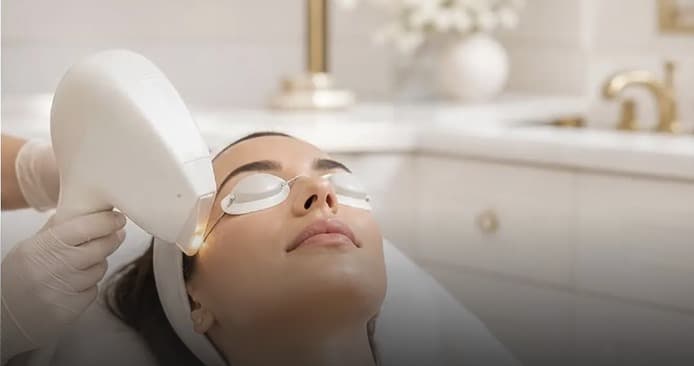
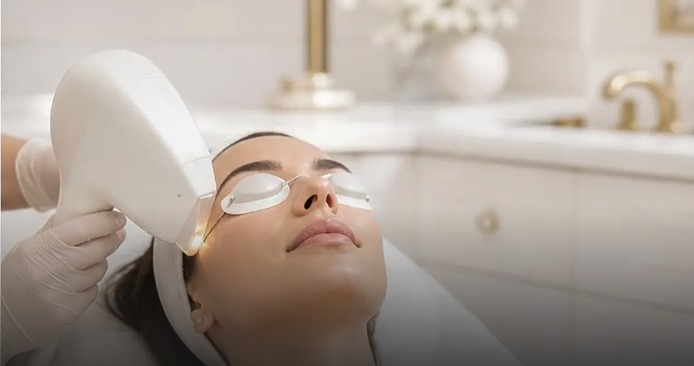
- Treatment — You lie comfortably while the LED panel is positioned over your face (or body area). You'll feel gentle warmth but no discomfort
- Post-care — Moisturiser and SPF are applied. That's it — you're done
Most clients describe it as deeply relaxing. Many drift off during the session.
Who Is LED Light Therapy For?
The beauty of LED is its versatility. It's suitable for:
- Ageing concerns — fine lines, loss of firmness, dull skin
- Acne-prone skin — active breakouts, post-acne redness, scarring
- Sensitive skin — rosacea, reactive skin, post-treatment recovery
- Post-procedure — after injectables, peels, microneedling, or laser
- Preventative care — younger clients maintaining healthy skin function
- Men's skincare — non-invasive and no-fuss, perfect for men exploring aesthetics
The only general contraindications are photosensitive conditions, certain medications (like Accutane), and pregnancy (as a precaution). Your therapist will always discuss your suitability during consultation.
LED at Home vs. Professional Treatment
With LED masks flooding the consumer market, a common question is whether at-home devices deliver the same results. The short answer: not quite.
| Factor | Professional LED | At-Home Masks | |--------|-----------------|---------------| | Power output | Medical-grade (high irradiance) | Consumer-grade (lower) | | Wavelength precision | Calibrated, specific nm | Approximate | | Coverage | Full face + neck panels | Limited coverage | | Treatment protocols | Customised per session | One-size-fits-all | | Results timeline | Visible in 3–4 sessions | May take months |
At-home devices can be a great maintenance tool between clinic visits, but they shouldn't replace professional treatments. Think of it like brushing your teeth at home vs. seeing the dentist — both matter, but they serve different purposes.
How Often Should You Have LED?
For optimal results, we typically recommend:
- Initial course: 2 sessions per week for 4–6 weeks
- Maintenance: Once every 2–4 weeks
- Post-treatment add-on: Immediately after other facial treatments
Consistency is key. The cumulative nature of LED means regular sessions deliver exponentially better results than sporadic visits.
Choosing the Right Clinic in Sydney
Not all LED is created equal. When choosing a clinic, look for:
- Medical-grade equipment — brands like Omnilux, Dermalux, or Healite II deliver clinical-strength wavelengths
- Qualified practitioners — therapists who understand skin biology and can customise your treatment
- Combination expertise — clinics that can integrate LED into a broader treatment plan
- Consultation-first approach — a proper skin assessment before recommending LED
The Bottom Line
LED light therapy represents the best of modern aesthetics: scientifically validated, completely non-invasive, and genuinely effective. Whether you're battling breakouts, chasing that collagen boost, or simply want to maintain healthy, radiant skin, it deserves a place in your treatment plan.
The technology will only improve from here. As wavelength research advances and devices become more sophisticated, we'll see even more targeted, personalised LED protocols. For now, 2026 is the perfect time to start.
Ready to experience LED light therapy? Book a consultation to discuss which wavelengths and treatment plan are right for your skin.