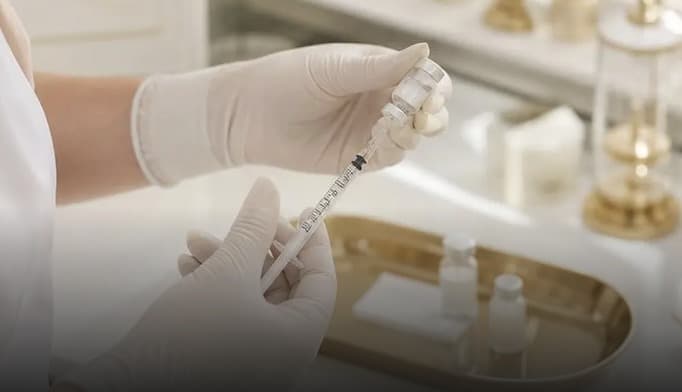
Injectable Peptides for Anti-Ageing: What Sydney Clients Need to Know in 2026
If you've spent any time on TikTok or Instagram this year, you've almost certainly seen the posts. Glowing influencers holding tiny syringes, promising "cellular rejuvenation," "collagen on demand," and skin that looks ten years younger — all thanks to injectable peptides.
The peptide beauty trend is officially everywhere in 2026. From BPC-157 to GHK-Cu, TB-500 to CJC-1295, these small chains of amino acids are being marketed as the next frontier in anti-ageing. Some clinics overseas are offering "glow blends" combining multiple peptides in a single injection protocol.
But here in Sydney, as a registered cosmetic nurse who works with injectables every day, I'm seeing something concerning: clients asking about peptides they've purchased online, peptides that aren't approved for human use in Australia, and peptides whose safety profiles we simply don't understand yet.
So let's have an honest conversation about what peptides are, what the science actually says, what's legal in Australia, and — most importantly — what proven alternatives can deliver the results you're looking for safely.
What Are Peptides, Exactly?
Peptides are short chains of amino acids — the building blocks of proteins. Your body naturally produces thousands of different peptides, and they act as chemical messengers that regulate everything from inflammation and immune response to collagen production and wound healing.
When we talk about peptides in the beauty industry, we're usually referring to synthetic peptides — laboratory-made versions designed to mimic or enhance these natural processes.
Some synthetic peptides have undergone rigorous clinical testing and have legitimate medical applications. The most famous example is GLP-1 peptides like semaglutide (sold as Ozempic and Wegovy), which are TGA-approved for diabetes management and weight loss based on extensive clinical trial data.
But the peptides trending on social media for skin rejuvenation? That's a very different story.
The Peptides Dominating Social Media in 2026
Here are the peptides you're most likely to see promoted for anti-ageing and skin health:
GHK-Cu (Copper Peptide)
What it's claimed to do: Stimulate collagen and elastin production, improve skin elasticity, reduce wrinkles, support wound healing, and promote hair growth.
What the science says: GHK-Cu is actually one of the more researched peptides, with over 50 years of published studies. It's a naturally occurring copper-binding peptide that declines with age. Research has shown it can influence gene expression related to tissue remodelling. However, most human studies involve topical application — not injection. The injectable form has far less clinical data supporting its safety and efficacy in humans.
Important note: When used topically in well-formulated skincare products, copper peptides are considered safe and effective. The injectable form is a completely different proposition.
BPC-157 (Body Protection Compound)
What it's claimed to do: Accelerate tissue healing, reduce inflammation, repair gut lining, and support skin regeneration.
What the science says: BPC-157 is derived from a protein found in gastric juice. Most of the research showing impressive healing results has been conducted in animal models — primarily rats. There are very few published human clinical trials. The Therapeutic Goods Administration (TGA) in Australia classifies BPC-157 as a Schedule 4 poison — meaning it's not approved for human consumption.
TB-500 (Thymosin Beta-4)
What it's claimed to do: Boost muscle growth, reduce inflammation, accelerate wound healing, and promote tissue repair.
What the science says: Like BPC-157, most evidence comes from animal studies and in-vitro research. TB-500 is not approved for human therapeutic use in Australia.
CJC-1295
What it's claimed to do: Stimulate growth hormone release, promote fat loss, improve sleep quality, and support skin health.
What the science says: CJC-1295 is a growth hormone-releasing hormone analogue. While there is some human clinical trial data, it is not TGA-approved for cosmetic or anti-ageing purposes. Manipulating growth hormone levels carries significant potential risks, including insulin resistance and potential tumour growth promotion.
Why the Hype Is Outpacing the Science
The peptide trend follows a familiar pattern in the beauty industry: promising early research (usually in animals) gets amplified by social media, repackaged by marketers, and sold to consumers long before proper human clinical trials have been completed.
Here's what's actually happening:
1. Most Research Is Pre-Clinical
The impressive wound-healing and tissue-repair results you see cited in peptide marketing almost always come from rat studies. While animal research is a valuable starting point, results in rodents frequently don't translate to humans. The doses, delivery methods, and biological responses can be dramatically different.
2. The Products Are Largely Unregulated
In Australia, many injectable peptides being sold online are marketed as "research chemicals" with labels stating "not for human consumption." This is a legal workaround — sellers can avoid TGA regulation by technically not marketing them as therapeutic goods, even though everyone knows they're being injected by consumers.
As UNSW researchers highlighted in April 2026, this means there's often no way to verify what's actually in the vial you're injecting. Contamination, incorrect dosing, and degraded peptides are all real risks.
3. Quality Control Is a Major Concern
A significant proportion of injectable peptides sold online are manufactured overseas, often in China, without the pharmaceutical-grade quality controls required for TGA-approved medicines. Professor Ian Musgrave from the University of Adelaide has warned that even if a synthetic peptide has the correct amino acid sequence, it may not fold correctly — meaning you could be injecting a "tangled mess" that your immune system recognises as foreign, potentially triggering severe allergic reactions or anaphylaxis.
4. Real Harm Has Already Occurred
In early 2026, two women in the United States became critically ill after receiving peptide injections at an anti-ageing festival in Las Vegas. Investigators were unable to determine exactly what the serums contained. Three people were fined thousands of dollars for their role in administering the injections.
The Legal Situation in Australia
Let's be crystal clear about the regulatory landscape:
- Regulated injectable peptides in Australia fall under prescription-only medicine categories. They should only be accessed through a qualified health professional for a legitimate medical indication.
- BPC-157 is classified as a Schedule 4 poison by the TGA — it is not approved for human therapeutic use.
- TB-500, CJC-1295, and injectable GHK-Cu are not TGA-approved for cosmetic or anti-ageing purposes.
- Australian regulators have already issued fines to companies illegally promoting injectable peptides directly to consumers.
- Some Australian telehealth companies operate in a grey area, offering "peptide consultations" and prescribing compounds off-label. While doctors have latitude for off-label prescribing, experts including Dr Norman Swan from the ABC have described some of these practices as "dodgy."
The bottom line: If someone is offering you injectable peptides for anti-ageing in Sydney without a thorough medical consultation, without explaining the regulatory status, and without informed consent about the lack of human clinical trial data — that's a red flag.
What About Topical Peptides?
Here's the good news: topical peptides — applied to the skin in serums and creams — are a completely different category, and many have genuine scientific support.
Topical peptides that are well-researched and considered safe include:
Matrixyl (Palmitoyl Pentapeptide-4)
One of the most studied cosmetic peptides, Matrixyl has been shown in clinical trials to stimulate collagen production and reduce wrinkle depth when applied topically. It's a staple ingredient in many professional skincare lines.
Argireline (Acetyl Hexapeptide-3)
Sometimes called "topical Botox" (though that's an overstatement), Argireline can temporarily reduce the appearance of expression lines by inhibiting neurotransmitter release at the skin surface. It won't replace actual anti-wrinkle injections, but it's a useful complement.
Copper Peptides (Topical GHK-Cu)
When formulated correctly in topical products, copper peptides have demonstrated genuine benefits for wound healing, collagen stimulation, and skin firmness. The key is choosing products from reputable brands that use stabilised formulations at effective concentrations.
PDRN (Polydeoxyribonucleotide)
One of the hottest ingredients of 2026, PDRN is derived from salmon DNA and has strong research supporting its role in skin regeneration and hydration. It's available in both topical serums and professional skin treatments (like skin boosters administered by qualified practitioners).
Proven Alternatives That Actually Work
If you're looking for genuine anti-ageing results backed by decades of clinical evidence, here's what we recommend at our Sydney clinic:
Anti-Wrinkle Injections (Botulinum Toxin)
The gold standard for dynamic wrinkles — frown lines, crow's feet, and forehead lines. Backed by over 30 years of clinical data, with a well-understood safety profile when administered by qualified practitioners.
Dermal Fillers (Hyaluronic Acid)
For volume loss, lip enhancement, and facial contouring, hyaluronic acid fillers offer predictable, reversible results. They're TGA-approved and have an extensive safety record.
Skin Needling (Collagen Induction Therapy)
Professional microneedling creates controlled micro-injuries that trigger your body's natural collagen production — using your own biological repair mechanisms. Combined with quality serums (including topical peptides and growth factors), it delivers genuine skin rejuvenation.
Skin Boosters
Injectable hydration treatments using cross-linked hyaluronic acid or polynucleotides improve skin quality from within. These are TGA-approved products administered by qualified practitioners in controlled clinical settings.
LED Light Therapy
Red and near-infrared LED therapy stimulates cellular energy production and collagen synthesis. It's non-invasive, has strong clinical evidence, and complements other treatments beautifully.
Professional Chemical Peels
Controlled exfoliation stimulates cell turnover and collagen remodelling. From gentle lactic acid peels to deeper TCA peels, there's an option for every skin type and concern.
How to Talk to Your Practitioner About Peptides
If you're curious about peptides, here's our advice:
-
Be honest about what you've seen online. Your practitioner should welcome questions and be willing to discuss the evidence (or lack thereof) openly.
-
Ask about regulatory status. Any reputable practitioner will tell you whether a treatment uses TGA-approved products and will explain what off-label use means.
-
Beware of "too good to be true" claims. If someone promises injectable peptides will reverse ageing at a cellular level, that's a marketing claim, not a medical one.
-
Consider topical peptides as part of your routine. Well-formulated peptide serums are a legitimate and safe addition to your skincare regimen.
-
Focus on proven treatments first. Build your anti-ageing plan on treatments with decades of evidence — then add emerging options as they gain proper clinical validation.
The Future of Peptide Therapy
We want to be clear: we're not anti-peptide. Peptide science is genuinely exciting, and some of these compounds may eventually prove to be safe and effective for cosmetic purposes in humans.
But "eventually" is the key word. Right now, in April 2026, the gap between the social media hype and the clinical evidence is enormous. The peptides being marketed as anti-ageing miracles have mostly been tested in rats, are manufactured without pharmaceutical-grade quality controls, and are not approved by Australian regulators for the purposes they're being sold for.
At SkinSpirit, we believe in offering our Sydney clients treatments that are:
- Evidence-based — supported by human clinical trials
- TGA-approved or administered within appropriate regulatory frameworks
- Administered safely — by qualified, registered practitioners in clinical settings
- Transparently explained — so you can make informed decisions about your skin
The best anti-ageing strategy isn't chasing the latest TikTok trend. It's building a personalised plan with your practitioner that combines proven treatments, quality skincare, sun protection, and healthy lifestyle habits.
Ready to Build Your Evidence-Based Anti-Ageing Plan?
If you're interested in genuine, safe, and effective anti-ageing treatments in Sydney, we'd love to help. Our team offers comprehensive skin consultations where we assess your unique concerns and create a personalised treatment plan using proven modalities.
Book a consultation at SkinSpirit today and discover what's actually possible when science meets skilled clinical care.
our cosmetic nurse is a registered cosmetic nurse at SkinSpirit Sydney, specialising in anti-wrinkle injections, dermal fillers, and advanced skin treatments. She is committed to evidence-based practice and transparent patient education.
This article is for informational purposes only and does not constitute medical advice. Always consult a qualified health professional before starting any new treatment.