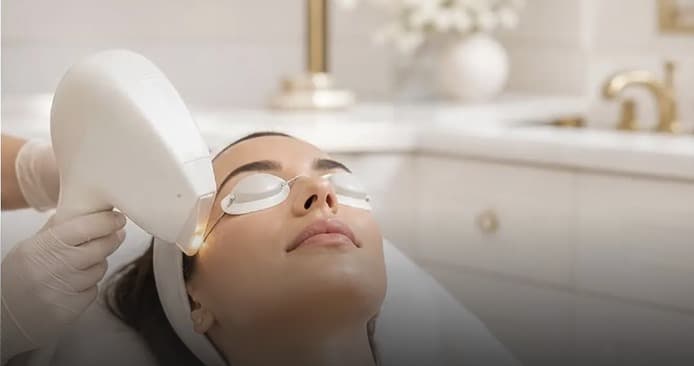
HIFU Skin Tightening: Your Complete Guide to the Non-Surgical Facelift Taking Sydney by Storm in 2026
There's a quiet revolution happening in Sydney's aesthetics clinics. Clients who once considered surgical facelifts as the only real solution for sagging skin and loss of definition are discovering something remarkable: HIFU — High-Intensity Focused Ultrasound — a treatment that can lift, tighten, and contour the face and body without a single incision.
In 2026, HIFU has cemented its position as one of the most sought-after non-surgical treatments in Australia. Whether you're noticing the first signs of jowling, a softening jawline, or loose skin around the neck, HIFU offers a clinically proven path to firmer, more youthful-looking skin — with zero downtime.
Let's dive into everything you need to know.
What Exactly Is HIFU?
HIFU stands for High-Intensity Focused Ultrasound. Unlike lasers or radiofrequency treatments that work on the skin's surface or mid-layers, HIFU delivers focused ultrasound energy to the deepest structural layers of the skin — the same layers targeted during surgical facelifts.
Think of it like using a magnifying glass to focus sunlight onto a single point. HIFU concentrates ultrasound waves at precise depths beneath the skin (typically 1.5mm, 3mm, and 4.5mm), creating tiny points of thermal coagulation. These micro-injuries trigger your body's natural wound-healing response, stimulating a surge of new collagen and elastin production.
The result? Gradual but significant tightening, lifting, and firming of the treated areas — all driven by your body's own regenerative processes.
How HIFU Differs from Other Skin Tightening Treatments
With so many energy-based treatments available in Sydney's clinics, it's worth understanding what makes HIFU unique:
HIFU vs Radiofrequency (RF)
Radiofrequency treatments like Thermage and Morpheus8 use electromagnetic energy to heat the dermis and stimulate collagen. They're excellent for surface-level tightening and skin texture improvement. However, RF typically works at shallower depths (up to 2-3mm).
HIFU reaches the SMAS layer (Superficial Musculo-Aponeurotic System) at 4.5mm — the same deep fascial layer that plastic surgeons manipulate during surgical facelifts. This deeper reach means HIFU can achieve true structural lifting that RF alone cannot replicate.
HIFU vs Thread Lifts
PDO thread lifts provide immediate mechanical lifting using dissolvable threads. While effective, they involve needles, carry a small risk of complications, and the threads dissolve over 6-12 months.
HIFU is entirely non-invasive — nothing enters the skin. The lifting effect builds gradually and can last 12-18 months or longer, depending on your skin's response and maintenance routine.
HIFU vs Laser Treatments
Laser skin tightening (like Fraxel or CO2 fractional) primarily targets the epidermis and superficial dermis. These treatments excel at improving texture, pigmentation, and fine lines but offer limited deep-layer tightening compared to HIFU.
Many clinicians in Sydney now recommend combination protocols — pairing HIFU for deep structural lifting with RF microneedling or laser resurfacing for surface refinement.
What Areas Can HIFU Treat?
HIFU is incredibly versatile. The most commonly treated areas include:
Face
- Jawline definition — tightening sagging skin along the jaw to restore a sharp, contoured profile
- Jowl reduction — lifting and firming the lower face where gravity takes its toll first
- Cheek lifting — restoring volume and height to mid-face areas that have descended
- Brow lifting — opening up the eye area by lifting drooping brows
- Nasolabial folds — softening the deep lines running from nose to mouth
Neck and Décolletage
- Turkey neck — tightening loose, crepey neck skin
- Double chin reduction — firming submental fullness
- Chest wrinkles — smoothing the horizontal lines that develop on the décolletage from sun damage and sleeping positions
Body
- Upper arms — tightening loose skin on the inner arms
- Abdomen — firming post-pregnancy or post-weight-loss laxity
- Inner thighs — addressing skin laxity in areas resistant to exercise
- Knees — smoothing crepey skin above the kneecaps
What Happens During a HIFU Treatment?
Understanding the treatment process helps set realistic expectations and ease any pre-appointment nerves.
Before Your Session
Your practitioner will conduct a thorough skin assessment and discuss your goals. They'll examine your skin laxity, tissue thickness, and facial structure to determine the optimal treatment depths and energy levels. Good candidates for HIFU typically have mild to moderate skin laxity — if the skin is severely loose, surgical options may be more appropriate.
You'll be advised to arrive with clean skin, free of makeup and skincare products.
During the Treatment
- Cleansing — The treatment area is thoroughly cleansed
- Mapping — Your practitioner maps out the treatment zones and marks key anatomical landmarks
- Ultrasound gel — A coupling gel is applied to ensure optimal energy delivery
- Treatment — The HIFU handpiece is placed against the skin, delivering precise lines of focused ultrasound energy. You'll feel a warm, prickling sensation — some areas (particularly near bony structures like the jawline) can be more intense
- Completion — The gel is removed, and a soothing serum or moisturiser is applied
A full-face treatment typically takes 60-90 minutes. Targeted areas like the jawline or neck may take 30-45 minutes.
Comfort Level
Let's be honest: HIFU isn't painless. Most clients describe it as a deep aching or sharp tingling sensation, particularly along the jawline and forehead. However, it's entirely tolerable for most people, and the discomfort lasts only while the energy is being delivered — each pulse takes just a fraction of a second.
Your practitioner can adjust the energy levels to balance efficacy with comfort. Some clinics offer numbing cream for sensitive clients, though many prefer to skip it for a full-face treatment as it can slightly affect results.
Results: What to Expect and When
This is where patience becomes your best friend.
Immediate Effects
You may notice a subtle tightening effect immediately after treatment — this is caused by the initial heat-induced collagen contraction. Some clients see a noticeable lift in their jawline or brow area right away.
You might also experience mild redness, slight swelling, or tenderness — all normal and typically resolving within a few hours to a day.
The Progressive Transformation
The real magic happens over the following 2-6 months as your body produces new collagen and elastin in response to the treatment. Most clients report:
- Week 2-4: Skin feels firmer and smoother to the touch
- Month 1-2: Visible improvement in jawline definition and overall tightness
- Month 3-4: Peak results — maximum collagen remodelling, noticeable lift and contour improvement
- Month 4-6: Continued refinement and settling of results
How Long Do Results Last?
HIFU results typically last 12-18 months, with some clients enjoying benefits for up to two years. The longevity depends on several factors:
- Age — younger skin (30s-40s) tends to respond more robustly
- Skin quality — well-maintained skin holds results longer
- Lifestyle factors — sun protection, nutrition, smoking status, and stress levels all play a role
- Maintenance treatments — annual touch-up sessions can extend and build upon results
Who Is the Ideal HIFU Candidate?
HIFU works best for clients who:
- Are aged 30-65 with mild to moderate skin laxity
- Notice early signs of sagging around the jawline, cheeks, or neck
- Want to prevent further ageing rather than correct severe laxity
- Prefer non-surgical approaches with no downtime
- Have realistic expectations about gradual, natural-looking improvement
- Want to maintain results from previous surgical procedures
Who Should Consider Alternatives?
HIFU may not be the best choice for:
- Clients with severe skin laxity (surgical consultation may be more appropriate)
- Those with active skin infections, open wounds, or cystic acne in the treatment area
- Pregnant or breastfeeding women
- Individuals with metallic implants in the treatment zone
- Those with certain autoimmune conditions (discuss with your practitioner)
The 2026 HIFU Landscape: What's New?
The HIFU technology available in Sydney's clinics today is significantly more advanced than even two years ago. Here's what's driving the trend:
Next-Generation Devices
Modern HIFU machines offer multiple transducer depths, allowing practitioners to customise treatments with unprecedented precision. Newer devices also feature improved comfort mechanisms, including integrated cooling and faster pulse delivery, making treatments more tolerable.
Combination Protocols
The biggest trend in 2026 is multi-modal treatment planning. Leading Sydney clinics are combining HIFU with complementary treatments for superior results:
- HIFU + RF Microneedling — deep lifting paired with surface tightening and texture improvement
- HIFU + Skin Boosters — structural lifting enhanced by deep hydration from polynucleotide or hyaluronic acid injections
- HIFU + LED Therapy — accelerating the healing response and collagen synthesis post-treatment
- HIFU + PRP — using your own platelet-rich plasma to supercharge the regenerative process
The Post-Weight-Loss Boom
With the widespread adoption of GLP-1 medications like Ozempic and Mounjaro across Australia, many clients are experiencing significant weight loss — and the skin laxity that often accompanies it. HIFU has emerged as a first-line non-surgical option for tightening loose facial skin in these patients, often referred to as "Ozempic face."
This trend has brought a new demographic into aesthetics clinics: clients who may never have considered cosmetic treatments before but need solutions for the physical changes following their weight-loss journey.
Preparing for Your HIFU Treatment
To maximise your results, follow these preparation guidelines:
One Week Before
- Avoid excessive sun exposure and tanning
- Discontinue retinoids and strong active skincare (AHAs, BHAs, vitamin C serums)
- Stay well hydrated — hydrated skin responds better to ultrasound energy
Day of Treatment
- Arrive with clean, product-free skin
- Avoid caffeine and alcohol for 24 hours prior (they can increase sensitivity)
- Take a paracetamol 30 minutes before if you're concerned about discomfort
- Wear comfortable clothing — you may be lying down for up to 90 minutes
Aftercare: Protecting Your Investment
Post-treatment care is straightforward but important:
Immediately After
- Apply a gentle, hydrating moisturiser
- Avoid touching or massaging the treated areas for 24 hours
- Skip makeup for the remainder of the day if possible
First Week
- Use SPF 50+ sunscreen daily (non-negotiable)
- Keep your skincare routine gentle — no retinoids, acids, or exfoliants for 5-7 days
- Stay hydrated — drink plenty of water to support collagen production
- Avoid saunas, steam rooms, and intense exercise for 48 hours
Ongoing
- Maintain a consistent skincare routine with SPF, antioxidants, and peptides
- Consider professional-grade skincare products to support collagen health
- Schedule follow-up appointments to track your progress
- Plan a maintenance session at 12-18 months to sustain results
HIFU and the Sydney Aesthetics Scene
Sydney's aesthetics market has matured significantly. Clients are more educated, more discerning, and more interested in subtle, natural-looking enhancement than ever before. HIFU fits perfectly into this philosophy — it's not about looking "done," it's about looking like the best, most refreshed version of yourself.
The treatment has become particularly popular among:
- Professional women in their 40s-50s wanting to maintain a polished, youthful appearance without surgery or obvious interventions
- Men discovering aesthetics for the first time — HIFU's "no-fuss" nature (no needles, no downtime, no visible recovery) appeals strongly to male clients
- Pre-event preparation — brides, professionals with upcoming events, and anyone wanting to look their best with zero recovery time
- Preventative ageing — younger clients in their 30s using HIFU proactively to maintain skin structure before significant laxity develops
Frequently Asked Questions
How many HIFU sessions do I need?
Most clients achieve excellent results from a single treatment, with maintenance sessions recommended every 12-18 months. Some clients with more significant laxity may benefit from two initial sessions spaced 3-6 months apart.
Can HIFU replace a facelift?
HIFU is not a replacement for a surgical facelift in cases of severe skin laxity. However, for mild to moderate sagging, many clients find HIFU delivers satisfying results that delay or eliminate the need for surgery. It's also an excellent option for maintaining results after a surgical facelift.
Is there any downtime?
Essentially none. You can return to normal activities immediately after treatment. Some clients experience mild redness or swelling that resolves within hours. Occasional temporary numbness or tingling may persist for a few days.
How much does HIFU cost in Sydney?
Prices vary depending on the treatment area and the device used, but a full-face HIFU treatment in Sydney typically ranges from $800 to $2,500. Targeted treatments (jawline only, neck only) may be available at lower price points.
Can I combine HIFU with injectables?
Yes, but timing matters. Most practitioners recommend waiting 2-4 weeks between HIFU and injectable treatments (anti-wrinkle injections or dermal fillers) to allow the initial inflammatory response to settle.
The Bottom Line
HIFU represents one of the most exciting advances in non-surgical aesthetics available today. Its ability to reach the deepest structural layers of the skin — the same layers addressed during surgical facelifts — sets it apart from every other non-invasive tightening technology on the market.
If you're noticing the early signs of facial sagging, a softening jawline, or loose neck skin, HIFU offers a scientifically proven, zero-downtime solution that works with your body's natural regenerative processes. The results are gradual, natural-looking, and long-lasting.
In a city like Sydney, where the aesthetic standard is refreshed rather than overdone, subtle rather than surgical, HIFU is the perfect fit.
Ready to explore whether HIFU is right for you? Book a consultation at SkinSpirit to discuss your goals and create a personalised treatment plan that puts your skin's long-term health first.